

Best adjuvant (assist) for chemotherapy | 1+1>487% |
Effectively improve chemotherapy effect, treatment, immunity.
Reduce side effects and recurrence.
Overview / Relation / Abstract / Role / Principle / Action / Mechanism / Function / Work
Abstract / Summary / Overview of Apoptosis.
Why do cells undergo apoptosis?
The relationship between cancer cells and apoptosis.
Where are the weaknesses and symptoms of cancer cells?
Are cancer cells aggressive?
Extraordinary Solamargine (Role, Principle, Action, Mechanism, Function, Work)
Solamargine's major function mechanism:
Solamargine vs cancer
Best Chemotherapy Adjuvant. (1+1>478%)
Effectively improve chemotherapy effect and cure.
When cancer cells are less resistant to drugs, chemotherapy becomes more effective.
extract : https://www.neurosurgery.columbia.edu/patient-care/conditions/cerebellar-astrocytomas
Cerebellar astrocytomas are tumors in the cerebellum, a region of the brain—near the base of the skull—that coordinates muscle movement and balance. At Columbia University Irving Medical Center/NewYork-Presbyterian Hospital, our neurosurgeons specialize in diagnosing and surgically treating cerebellar astrocytomas.
Like other astrocytomas of the brain and spinal cord, cerebellar astrocytomas develop from astrocytes.
The World Health Organization grades tumors on a scale of one to four. The grade indicates the speed at which a tumor grows and its ability to spread to nearby tissues. Most cerebellar astrocytomas (80 percent) are low grade tumors, meaning they are slow-growing and rarely spread. High grade astrocytomas in the cerebellum, although rare, grow quickly and can spread.
Symptoms
Symptoms vary and depend on tumor location and other characteristics.
As cerebellar astrocytomas grow, they can block the flow of cerebrospinal fluid (CSF), which bathes and protects the brain. The blockage may lead to hydrocephalus and in turn increase intracranial pressure.
Individuals who have elevated intracranial pressure may experience headaches, particularly in the morning; vomiting and/or nausea; and neck pain or stiffness. Having a headache when waking up in the morning is the most common symptom of cerebellar astrocytomas.
Abstract / Summary / Overview of Apoptosis.
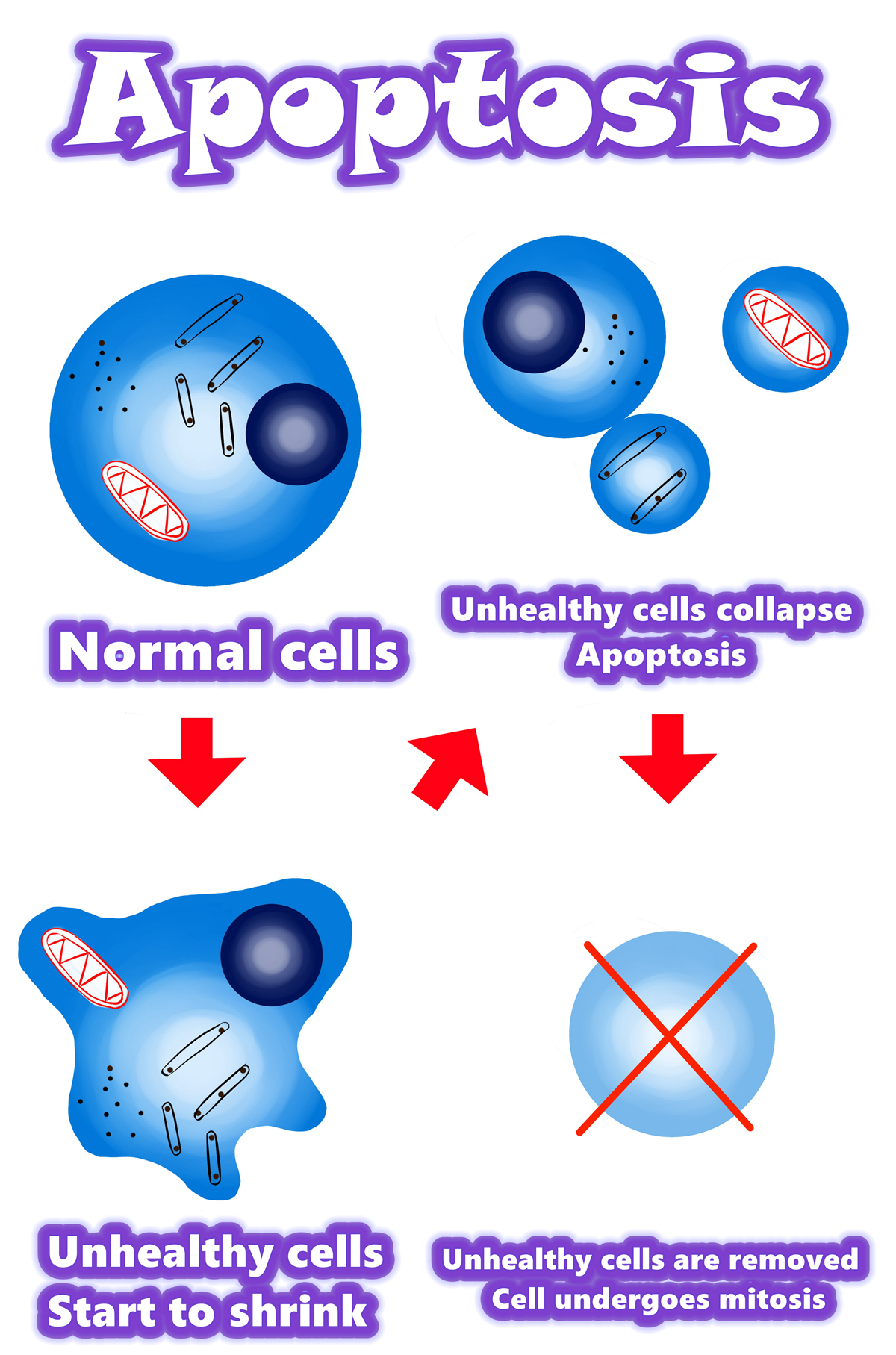
Overview of apoptosis
•Programmed cell death.
•Apoptosis is a form of programmed cell death, or “cellular suicide.”
•Apoptosis is different from necrosis, in which cells die due to injury.
•Apoptosis removes cells during development, eliminates potentially cancerous and virus-infected cells, and maintains balance in the body.
Why do cells undergo apoptosis?
- Basically, apoptosis is a general and convenient way to remove cells that should no longer be part of the organism.
- Some cells are abnormal and could hurt the rest of the organism if they survive, such as cells with viral infections or DNA damage.
- Apoptosis is part of development
- In many organisms, programmed cell death is a normal part of development.
The relationship between cancer cells and apoptosis
Apoptosis can eliminate infected or cancerous cells.
When a cell’s DNA is damaged, it will typically detect the damage and try to repair it.
If the damage is beyond repair, the cell will normally send itself into apoptosis, ensuring that it will not pass on its damaged DNA.
When cells have DNA damage but fail to undergo apoptosis, they may be on the road to cancer.
However, “successful” cancer cells successfully evade the process of apoptosis.
This allows them to divide out of control and accumulate mutations (changes in their DNA).
Apoptosis is key to immune function
Apoptosis also plays an essential role in the development and maintenance of a healthy immune system.
Where are the weaknesses and symptoms of cancer cells?
The symptoms of cancer cells are in the nucleus.
The nucleus controls the outer cytoplasm, cell composition, cell viability, etc.
DNA mutations also mutate in the nucleus.
Therefore, to treat cancer cells, we must first enter the nucleus.
Let the “regulatory cell gene” mechanism enter the nucleus to regulate
Are cancer cells aggressive?
After the action of Solamargine, the aggressiveness of cancer cells is alleviated.
So after using Solamargine, many patients feel that I am half better.
Although the tumor does not disappear quickly, patients feel that the degree of aggressiveness is reduced.
Extraordinary Solamargine (Role, Principle, Action, Mechanism, Function, Work).
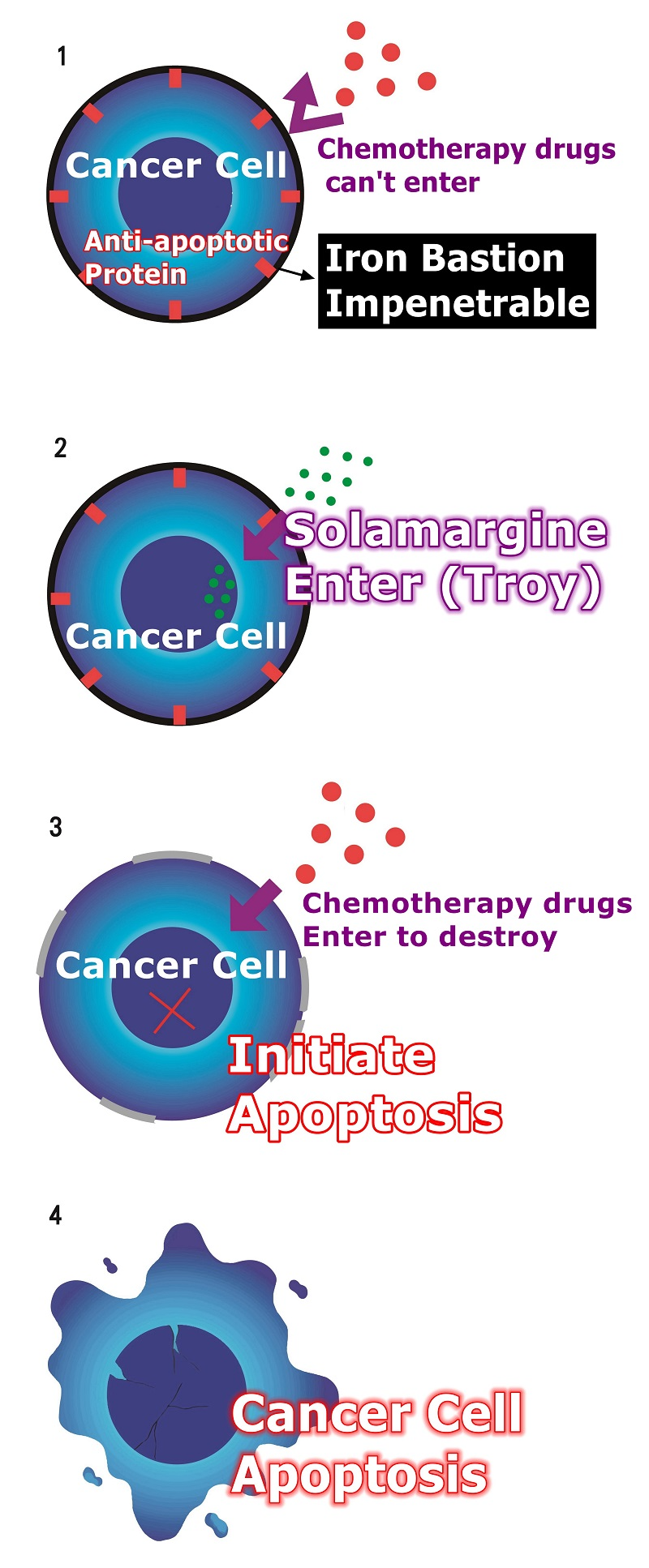
Solamargine's major function mechanism:
When Solamargine enter,
Solamargine activates receptors that are turned off by cancer cells, allowing cancer cells to modulate again.
Solamargine modulates the anti-modulates genes of cancer cells, making cancer cells less resistant.
Reduced drug resistance
When cancer cells are less resistant to drugs, chemotherapy becomes more effective.
Solamargine modulates the mutated genes in cancer cells and then initiates cancer cell apoptosis to achieve anti-cancer effects.
Solamargine combined with which chemotherapy drugs are more effective in treating cancer cells?

Solamargine vs cancer 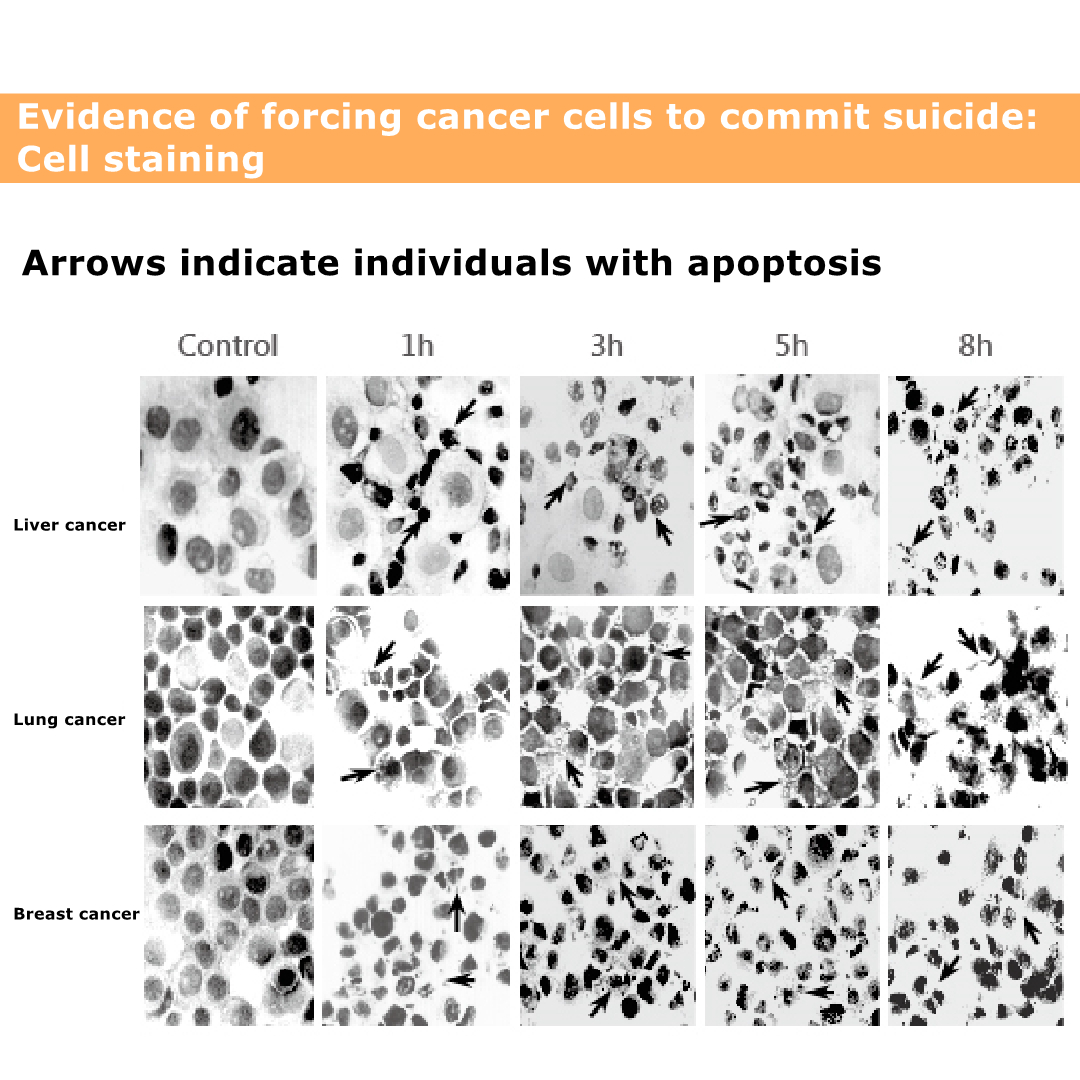
Solamargine vs cancer
The picture shows the death of cancer cells.
The black and black parts are cancer cell nuclei.
Even if the nucleus ruptures, the cancer cells will die.
The figure shows that cancer cells can cause death.
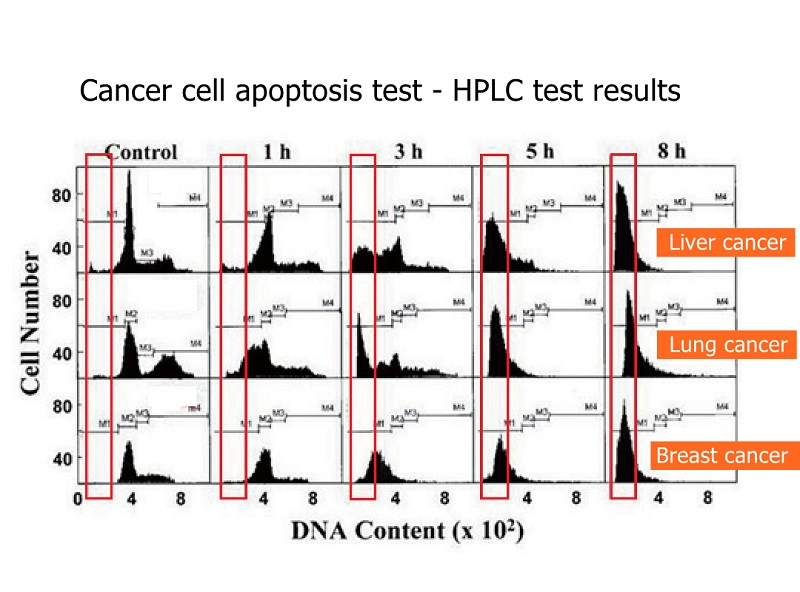
The figure shows that cancer cells can cause death.
The figure shows that the death of lung cancer cells is relatively slow, and it will not be obvious until eight hours later.
The figure shows that the death of liver cancer cells is very obvious, even more obvious in eight hours.
The graph shows that breast cancer cells die faster. It was obvious from the beginning that breast cancer is easy to treat, and patients with breast cancer need not worry.
Best Chemotherapy Adjuvant. (1+1>487%)
Effectively improve chemotherapy effect and treatment.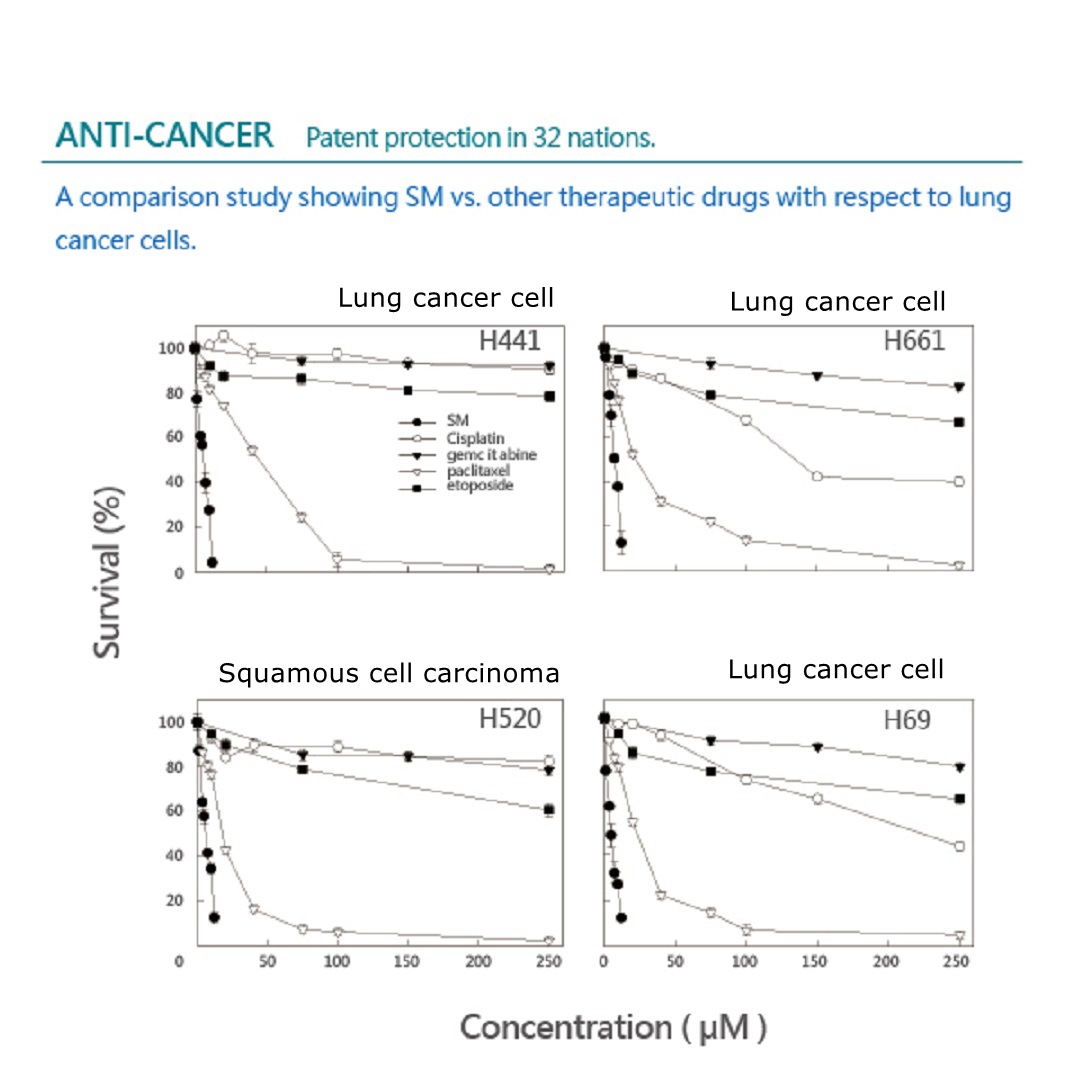
ANTI-CANCER
Patent protection in 32 nations.
A comparison study showing Solamargine vs. other therapeutic drugs with respect to lung cancer cells.
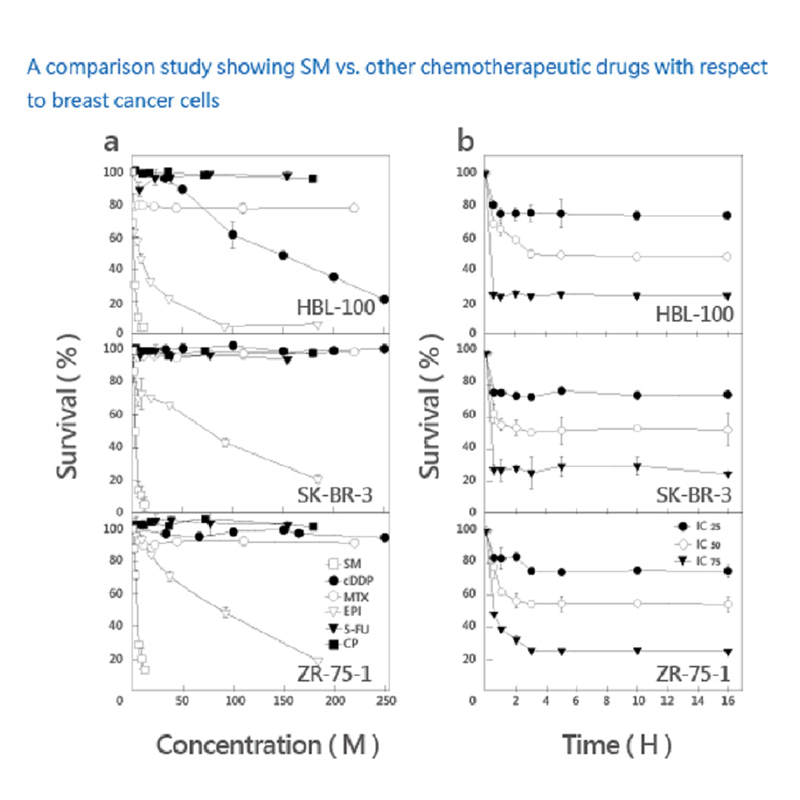 A comparison study showing Solamargine vs. other chemotherapeutic drugs with respect to breast cancer cells.
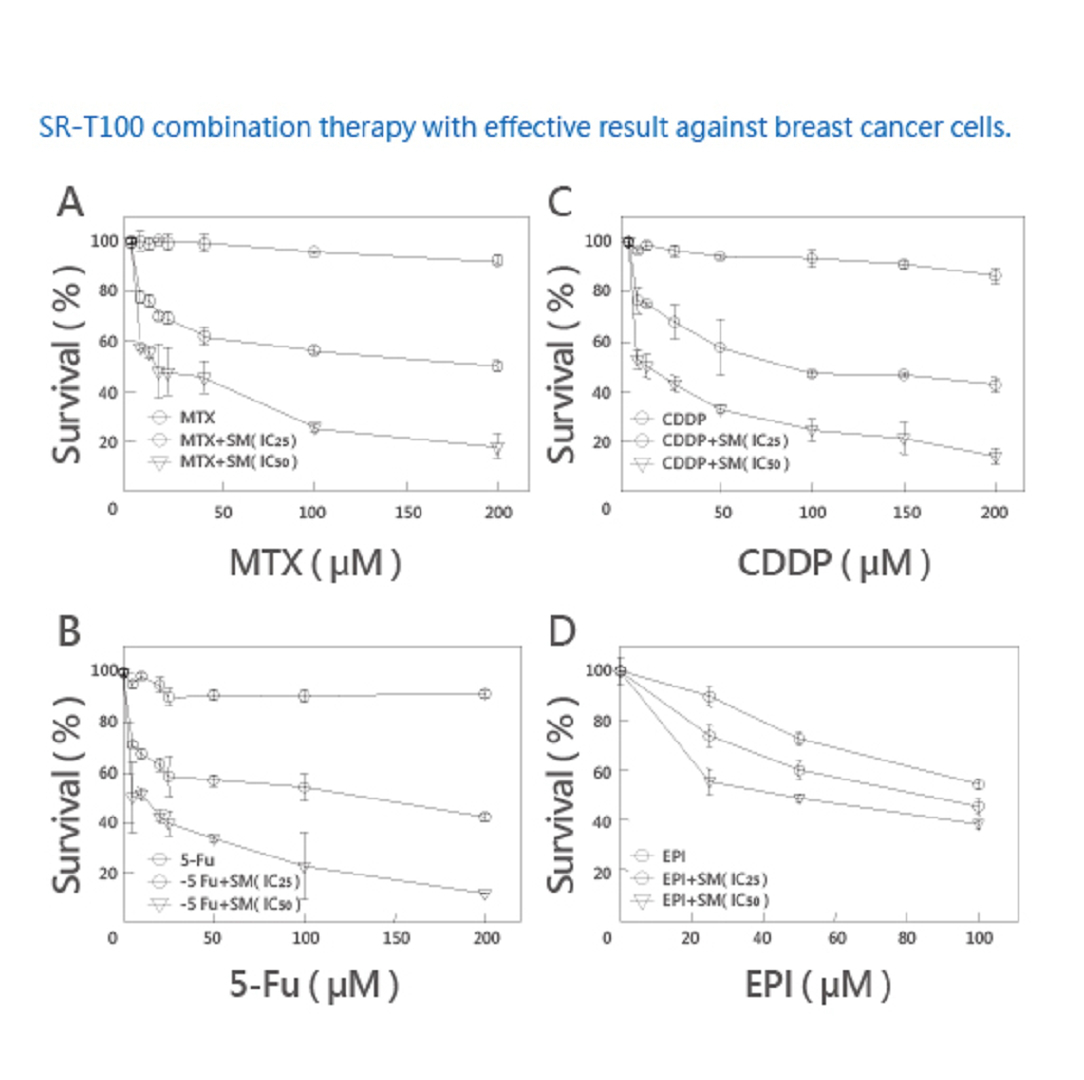
SR-T100 combination therapy with effective result against breast cancer cells.
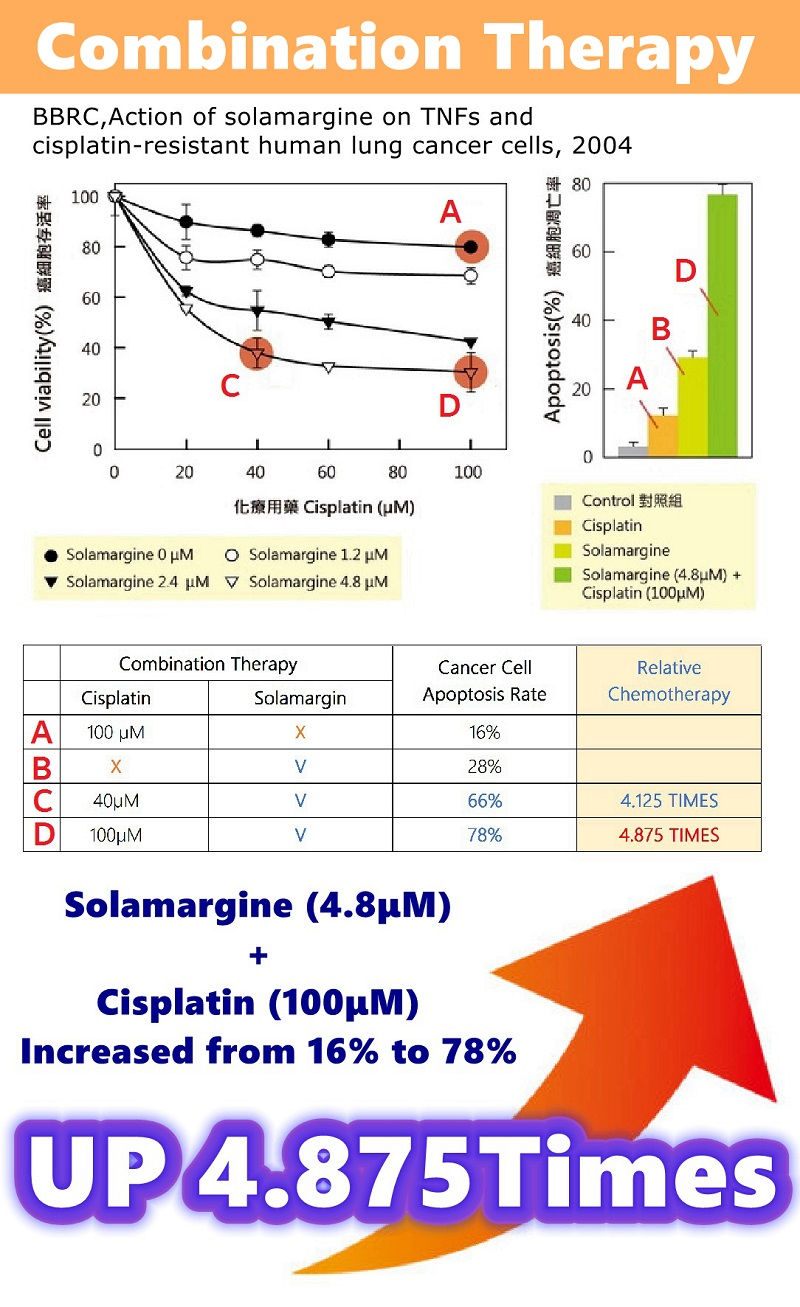
Combination Therapy | Research results for lung cancer cells.
A. Chemotherapy (100μM), 16% of cancer cell apoptosis.
B. Alone SM (4.8μM), 28% of cancer cell apoptosis.
C. SM (4.80μM) + Chemotherapy (40μM), 66% of cancer cells apoptosis.
D. SM (4.80μM) + Chemotherapy (100μM), 78% of cancer cell apoptosis.
SM has a clearing effect better than Chemotherapy.
The combined treatment of Solamargine and Chemotherapy significantly increased the apoptosis of lung cancer cells.
SM (4.8μM) + Chemotherapy (40μM), increased from 16% to 66% (up to 4.125 times).
SM (4.8μM) + Chemotherapy (100μM), increased from 16% to 78% (up to 4.875 times).
Reorganized from: BBRC. Action of Solamargine on TNFs and drug-resistant human lung cancer cells 2004.