

Lourdes , France : Miracle Water | The Secret of H2 | A Pilgrimage Site Where Miracles and Nature Intertwine | Fountain of Youth | Water of Longevity | Hydrogen Water | Hydrogen-Rich Water | Prevention is better than a cure.
God's grace left to humankind, let us receive God's grace!
"Lord, thank you for your grace, glory to you, hallelujah!"
Lourdes , France
Located in southwestern France, Lourdes is world-renowned for its legends of the Virgin Mary's apparitions and the Miracle Spring, making it one of the world's most important Catholic pilgrimage sites. Millions of believers and tourists from around the world visit each year, bringing a unique religious atmosphere and cultural charm to this small town.
The Origins of Miracles and Manifestations of the Virgin Mary | The Origin of Hydrogen-Rich Water
The story of the Lourdes miracles dates back to 1858. A 14-year-old farm girl, Bernadette Soubirous, witnessed the Virgin Mary appear 18 times over five months in a local cave. During one of these appearances, the Virgin Mary instructed her to wash in a spring within the cave. The spring subsequently became known as a "holy spring" with healing powers and began attracting large numbers of believers.
Among the many miraculous stories, the most famous is that of Anna Santaniello's recovery. As a young woman, Anna suffered from severe heart disease, causing breathing difficulties, swollen legs, and even difficulty walking. Her older siblings also died from the same illness. With no hope of treatment, she decided to travel to Lourdes.
Upon arrival, due to the severity of her illness, her friends tried to stop her from going into the water, but Anna insisted on immersing herself in the sacred spring. In the water, she felt warmth in her chest, her breathing instantly became easier, and the swelling in her legs quickly subsided. This incredible recovery is considered one of the most representative miracles in the local community.
Scientific Research: The Mysterious Composition of Lourdes Holy Water | The Secret of God's Grace Left to Humanity | Hydrogen-Rich Water
While faith and miracles are central to Lourdes' reputation, the scientific community has also analyzed its springs. In 2007, Professor Shigenori Ohta of Nippon Medical School pointed out in Nature Medicine that hydrogen molecules are different from other antioxidants.
Studies have found that spring water contains a relatively high concentration of hydrogen atoms (approximately 550 PPB). Hydrogen molecules only eliminate harmful free radicals (hydroxyl radicals OH-, peroxynitrite anions ONOO-), but have no effect on functional free radicals (NO-, O2-). This selective ability to eliminate harmful free radicals while preserving beneficial ones is not found in other antioxidant foods, such as vitamins C and E, coenzyme Q, and catechuic acid.
In addition, because hydrogen molecules have the smallest molecular weight in the universe, they enter cells quickly and rapidly neutralize harmful free radicals into water, which is then metabolized out of the body. This process is beneficial and stress-free, and it is difficult to find another product with such perfect antioxidant capabilities.
God's grace left to humankind, let us receive God's grace!
"Lord, thank you for your grace, glory to you, hallelujah!"

The world's four holy waters: hydrogen-rich water with high hydrogen atom content
The hydrogen content of holy water from Lourdes, France: 550 PPB
Hydrogen content of sacred water in Tlacote, Mexico: 250 PPB
Norudenau spring water in Germany, hydrogen content: 100 ppb
Hunzas hydrogen content: 400 PPB
The vision of health: Hydrogen-rich water – from healing to prevention. "Superior doctors treat illness before it occurs."
In Japan, it's commonly known as longevity water, the fountain of youth, or hydrogen water.
Prevention is better than a cure.
While traditional medical methods can treat or control diseases, they are difficult to use as preventative tools. For example, diseases like hypertension and diabetes can only be controlled with medication, but cannot be prevented from developing. Cancer treatment heavily relies on surgery, radiotherapy, and chemotherapy, and cannot be intervened in advance for high-risk groups. Therefore, we have been searching for methods that can both alleviate disease and prevent its onset, while remaining harmless to the human body. In the past decade or so, hydrogen molecular medicine has developed rapidly internationally. Research shows that hydrogen water and hydrogen gas have potential in anti-oxidation, anti-inflammation, and cell protection, providing new methods for health management and demonstrating good results.

From lifestyle culture – serving a cup of tea – to the daily practice of “renewing mitochondria”
In the grand vision of "water for all living beings" envisioned by General Manager Guo of Mingquan Green Energy,
water is never just for quenching thirst, but a medium that carries care, filial piety, and the protection of health .
The culture of serving tea is the most accessible and approachable expression of kindness;
however, in modern society, we are beginning to consider:
👉How can we ensure that this cup of water truly provides long-term health benefits?

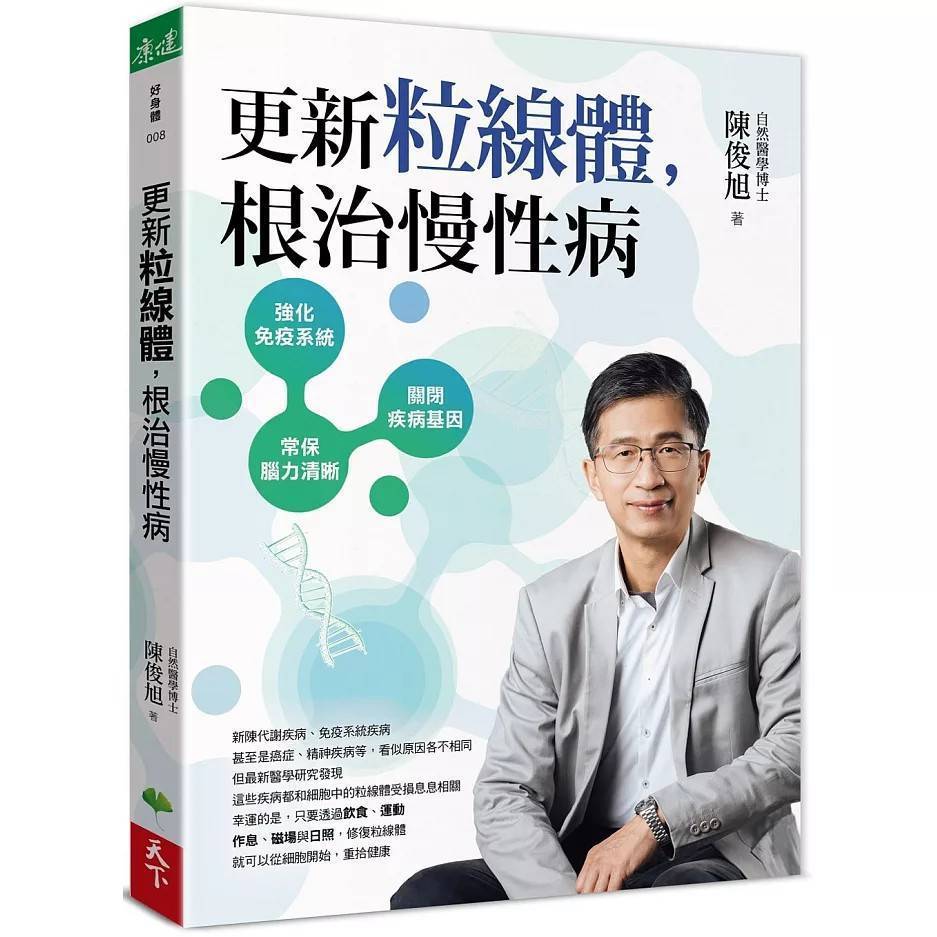
The key to health is not just "what you eat," but "whether your cells still have the strength."
The book "Renewing the Mitochondria to Cure Chronic Diseases" mentions:
Most cases of chronic fatigue, decreased metabolism, and slowed recovery
are not caused by a single disease, but are the result of the gradual decline in mitochondrial function.
Mitochondria are the "energy factories" in cells,
responsible for producing the energy (ATP) needed for our daily activities, thinking, and repair.
When mitochondrial function declines, the body often experiences the following:
- Easily fatigued and lacking energy
- Slower circulation and metabolism
- Decreased repair capacity and prolonged recovery period
- It is especially easy to feel uncomfortable after prolonged activity.
These are the everyday problems we often see in many elderly people and patients.
One of the biggest enemies of mitochondria: oxidative stress
While mitochondria produce energy, they also generate free radicals.
When there are too many free radicals and the scavenging capacity decreases, oxidative stress
is created , which in turn damages the cells and mitochondria themselves.
📌This is a vicious cycle of "the more tired you are, the slower your metabolism becomes, and the slower your metabolism becomes, the more tired you are".
Therefore, the focus of modern health maintenance
is no longer just "supplementing nutrition",
but how to gently reduce oxidative stress in daily life and support mitochondrial function .
Why has medicine begun to focus on "hydrogen molecules" in recent years?
In hydrogen molecule medicine research, hydrogen molecules (H₂ ) are considered to be selective antioxidant molecules .
The properties of the hydrogen molecule (H₂ ) include:
- The molecules are extremely small and can quickly enter cells and mitochondria.
- It does not affect the body's normal physiological responses.
- It is metabolized into water in the body and does not cause any burden.
This is why "hydrogen-rich water" is also known as "hydrogen water," "longevity water," and "fountain of youth" in Japan.
👉It is positioned as a daily supportive rather than a therapeutic health aid .
The role of hydrogen-rich water in daily drinking
In the tea-serving culture, hydrogen-rich water is neither medicine nor a short-term stimulus,
but plays the following role:
- Assists in regulating oxidative stress in the body and supports the mitochondrial environment
- Stabilizes daily metabolism and circulation, gentle and non-irritating.
- The water is smooth and suitable for long-term drinking by the elderly, patients, and people who engage in prolonged physical activity.
This is precisely
why it is particularly suitable for the elderly, patients, and those with poor metabolism.
A glass of water: From daily care to supporting mitochondria in everyday health practices
"Updated Mitochondria" × Hydrogen Molecular Medicine × Daily Life
1. Today we're not talking about "treatment" but rather "how to make your body feel less tired."
In clinical settings and care settings, we often hear patients and the elderly say:
"Checking the numbers is okay, but it's tiring."
"I don't have any serious illness, but my recovery is getting slower and slower."
"I feel exhausted and my energy drops very quickly after just a short activity."
These conditions are often not caused by a problem in a single organ.
Instead, it leads to a decrease in the body's overall energy allocation efficiency.
The book "Cure Chronic Diseases by Updating the Mitochondria" highlights a core idea:
👉Many chronic discomforts are closely related to decreased mitochondrial function.
The key to health is not just "what you eat," but "whether your cells still have the strength."
The book "Renewing the Mitochondria to Cure Chronic Diseases" mentions:
Most cases of chronic fatigue, decreased metabolism, and slowed recovery
are not caused by a single disease, but are the result of the gradual decline in mitochondrial function.
Mitochondria are the "energy factories" in cells,
responsible for producing the energy (ATP) needed for our daily activities, thinking, and repair.
When mitochondrial function declines, the body often experiences the following:
- Easily fatigued and lacking energy
- Slower circulation and metabolism
- Decreased repair capacity and prolonged recovery period
- It is especially easy to feel uncomfortable after prolonged activity.
These are the everyday problems we often see in many elderly people and patients.
One of the biggest enemies of mitochondria: oxidative stress
While mitochondria produce energy, they also generate free radicals.
When there are too many free radicals and the scavenging capacity decreases, oxidative stress
is created , which in turn damages the cells and mitochondria themselves.
📌This is a vicious cycle of "the more tired you are, the slower your metabolism becomes, and the slower your metabolism becomes, the more tired you are".
Therefore, the focus of modern health maintenance
is no longer just "supplementing nutrition",
but how to gently reduce oxidative stress in daily life and support mitochondrial function .
Why has medicine begun to focus on "hydrogen molecules" in recent years?
In hydrogen molecule medicine research, hydrogen molecules (H₂ ) are considered to be selective antioxidant molecules .
The properties of the hydrogen molecule (H₂ ) include:
- The molecules are extremely small and can quickly enter cells and mitochondria.
- It does not affect the body's normal physiological responses.
- It is metabolized into water in the body and does not cause any burden.
This is why "hydrogen-rich water" is also known as "hydrogen water," "longevity water," and "fountain of youth" in Japan.
👉It is positioned as a daily supportive rather than a therapeutic health aid .
The role of hydrogen-rich water in daily drinking
In the tea-serving culture, hydrogen-rich water is neither medicine nor a short-term stimulus,
but plays the following role:
- Assists in regulating oxidative stress in the body and supports the mitochondrial environment
- Stabilizes daily metabolism and circulation, gentle and non-irritating.
- The water is smooth and suitable for long-term drinking by the elderly, patients, and people who engage in prolonged physical activity.
This is precisely
why it is particularly suitable for the elderly, patients, and those with poor metabolism.
A glass of water: From daily care to supporting mitochondria in everyday health practices
"Updated Mitochondria" × Hydrogen Molecular Medicine × Daily Life
1. Today we're not talking about "treatment" but rather "how to make your body feel less tired."
In clinical settings and care settings, we often hear patients and the elderly say:
"Checking the numbers is okay, but it's tiring."
"I don't have any serious illness, but my recovery is getting slower and slower."
"I feel exhausted and my energy drops very quickly after just a short activity."
These conditions are often not caused by a problem in a single organ.
Instead, it leads to a decrease in the body's overall energy allocation efficiency.
The book "Cure Chronic Diseases by Updating the Mitochondria" highlights a core idea:
👉Many chronic discomforts are closely related to decreased mitochondrial function.
2. What are mitochondria?
In clinical terms
Mitochondria are the units in a cell responsible for "generating energy, maintaining endurance, and repairing."
When the mitochondria are in poor condition, what is commonly seen is not an acute illness, but rather these "slowly accumulating sensations":
• Easily fatigued and have difficulty concentrating
• Slower circulation and metabolism
• Longer recovery period
• Feeling particularly uncomfortable after standing or walking for a long time.
This is precisely the case for the elderly, patients with chronic diseases, long-term caregivers, those with poor metabolism, and overworked volunteers.
The most common situations encountered in daily life.
3. Why is "oxidative stress" a key issue in mitochondria?
During the process of mitochondria producing energy (ATP), they naturally generate free radicals.
When you are young and have good repair capabilities, your body can maintain its balance on its own.
As we age, chronic inflammation, stress, and lack of sleep increase.
This leads to a decrease in the body's efficiency in eliminating free radicals, resulting in severe oxidative stress.
For medical professionals, this emphasizes that the core of anti-aging should be "reducing oxidative stress damage" rather than simply "supplementing nutrition".
Key points:
Mechanism : Chronic inflammation and long-term stress combine to reduce the efficiency of free radical scavenging, leading to the accumulation of oxidative stress.
Health impacts: These factors can lead to cardiovascular disease, functional impairment, and cognitive decline.
Medical strategy: For the body's defense system, the focus should be on reducing unnecessary physical strain (such as blood sugar control, stress reduction, and quality sleep) rather than blindly supplementing with nutritional products.
💡Why is "less consumption" better than "more replenishment"?
We can think of the body's antioxidant system as a reservoir :
- The blind spots of blindly "supplementing":
- Excessive intake of exogenous antioxidants (such as high doses of vitamin C and E) can sometimes interfere with the body's natural signal transduction and even produce a "pro-oxidation" effect.
- Intestinal absorption and bioavailability are often lower than expected.
- Implement a strategy of "minimal consumption":
- Control at the source: reduce processed foods, refined sugar (reduce advanced glycation end products (AGEs)), heavy metals, and environmental toxins.
- Optimize sleep: Sleep is the golden time for the brain's glymphatic system to detoxify and remove metabolic waste.
- Emotional management: Long-term high levels of cortisol can directly damage mitochondrial function and increase the production of free radicals.
4. The Role of Hydrogen Molecules in Medical Research
In the literature on hydrogen molecule medicine,
Hydrogen molecules (H ₂ ) are considered a type of **selective antioxidant molecule**.
Its research value lies in:
• The molecules are so small that they can enter cells and mitochondria.
• Does not interfere with the oxidation reactions required for normal physiology
• It is metabolized into water, does not accumulate, and does not increase the burden on the body.
This is why, in current medical discussions, the hydrogen molecule is defined as:
👉It supports the body's internal balance through "environmental adjustment factors," rather than drugs or replacement therapies.
5. Why "hydrogen-rich water" instead of "one-time replenishment"?
For the elderly, patients, those with poor metabolism, and those who are overworked,
One concept is very important:
Mitochondrial health is never a one-time treatment.
Instead, it is long-term, low-stimulation, and sustainable support.
The properties of "hydrogen-rich water" perfectly meet this condition:
• Can be used as part of daily drinking water
• The water is mild and does not irritate the stomach.
Suitable for the elderly, patients with chronic diseases, and people who engage in prolonged physical activity.
• Does not involve dosage and does not interrupt existing medical care
Therefore, the practical role of "hydrogen-rich water" is:
👉 "Support at the level of daily living care, rather than medical intervention"
6. Why is the "tea-serving culture" actually scientific, and why is it particularly suitable for using hydrogen-rich water?
Serving tea, while seemingly a cultural practice, actually aligns perfectly with the logic of health support:
• Regularity (occurs daily)
• Small amount (not a burden)
• Long-term (cumulative effect)
• No stress (not considered therapy)
A long-term, stable, and repetitive behavior .
Mitochondrial health is never achieved through a single supplement,
but rather through
gentle, long-term support, little by little each day
.
This is precisely the kind of support that mitochondria need most.
In spaces for the elderly, patients, long-term care, chronic diseases, and the community,
A glass of hydrogen-rich water actually plays the role of:
• Physical buffering for the elderly, patients, and those with chronic diseases after activity
• Reassuring details prepared by Xinglin for patients
• An energy support/physical support for overworked volunteers during long service hours
It doesn't deliberately promote health, but it silently protects us in our daily drinking water.
7. On-site feedback: Why are most of the responses "very down-to-earth" / "visible changes in the body"?
The common feedback isn't "becomes magical," but rather:
" It tastes better, so I'll drink more water."
" If you stay active for a longer period, your energy won't drop as quickly."
- Less dry mouth and fatigue.
This aligns perfectly with the medical expectation of gently adjusting oxidative stress.
It does not immediately change the disease.
Instead, it helps the body "to better withstand daily life."
Day by day, allow your body to gradually return to a more stable state.
8. Summary
• It is not a medicine
• Does not replace any treatment
• No guarantee of therapeutic effect
What it does is at the level of life.
To help reduce the strain on your body,
There is more room for improvement.
Conclusion
Taking care of your health is often not about "doing more," but about "consuming less each day."
A cup of prepared "longevity hydrogen-rich water" is a symbol of care in the tea-serving culture;
From the perspective of mitochondrial medicine, it is about supporting the environmental selection of the internal energy system.
When care becomes gentle, sustainable, and stress-free,
That's what truly lasts. The most reliable health support in modern life.
Hydrogen Water Q&A
Collection of papers on hydrogen molecule medicine, health care, and disease treatment